

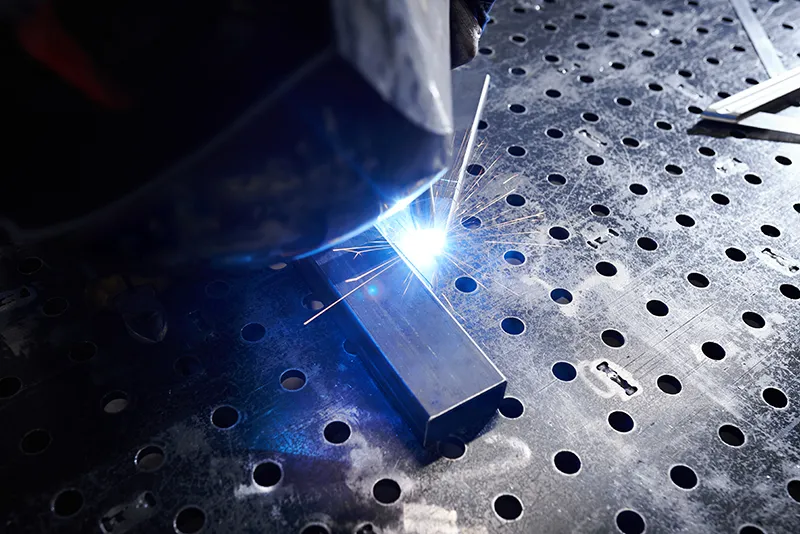
Laser welding has transformed the way manufacturers and fabrication shops approach metal joining. By using a highly focused beam of light to melt and fuse materials, this advanced welding technique delivers a level of precision and speed that traditional methods simply cannot match. For industries that demand tight tolerances and clean, reliable joints, laser welding has become one of the most powerful tools in the modern fabrication toolkit.
How Laser Welding Works
At its core, laser welding concentrates an intense beam of energy onto a very small area of metal. That focused energy creates a narrow, deep weld with minimal heat spread to surrounding material. Unlike MIG or TIG welding, which rely on an electrical arc and often require filler metals, laser welding can join materials with little to no filler at all. The result is a weld that is both structurally strong and visually clean, with far less post-weld finishing required.
Why Laser Welding Is Gaining Ground in Fabrication
One of the biggest advantages of laser welding is its precision. The heat-affected zone is significantly smaller compared to conventional welding methods, which means less warping, less distortion, and less stress on the finished part. This is especially critical for thin-gauge materials and components where even slight deformation can compromise fit or function.
Speed is another major factor. Laser welding operates at a pace that traditional processes struggle to match, making it an ideal fit for high-volume production environments. Faster weld cycles translate directly into shorter lead times and lower labor costs, which is why the global laser welding equipment market continues to grow year over year.
Beyond speed and precision, laser welding also opens the door to joining materials that can be difficult to weld with conventional methods. Certain stainless steels, dissimilar metal combinations, and other specialty alloys respond well to the controlled energy input of a laser, producing joints with strength that meets or even exceeds the base material.
Where Laser Welding Fits in Today’s Shop
The growing accessibility of fiber laser technology has made laser welding more practical for fabrication shops of all sizes. What was once reserved for aerospace and automotive manufacturers is now reaching contract manufacturers and custom fabrication operations. As equipment costs come down and the technology becomes easier to integrate, shops that combine laser welding with existing MIG, TIG, and CNC capabilities are positioning themselves to take on a broader range of projects with higher quality standards.
For businesses in industries like automotive, agriculture, construction, and industrial equipment, understanding how laser welding fits into a project can make the difference between an adequate result and an exceptional one. The right fabrication partner will know when laser welding is the best approach and when another method better serves the application.
Work with a Fabrication Team That Stays Ahead
At Elite Welding & Fabrication, we stay on top of the latest welding and fabrication technologies so our customers get the best possible results on every project. From our Galesburg, Michigan shop, we serve businesses and individuals across Kalamazoo and Southwest Michigan with precision welding, CNC cutting and forming, metal fabrication, prototyping, and contract manufacturing. Whether your project calls for traditional welding methods or you want to explore the possibilities of laser technology, our experienced team is ready to help.
Contact Elite Welding & Fabrication today at 269.389.9991 or visit our contact page to get started.